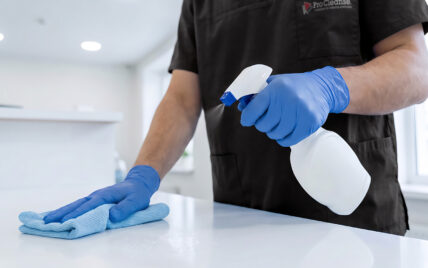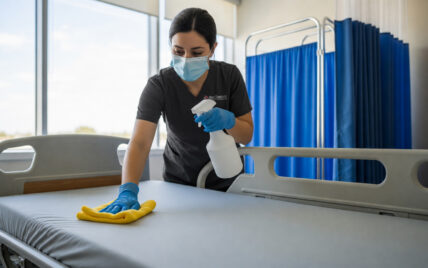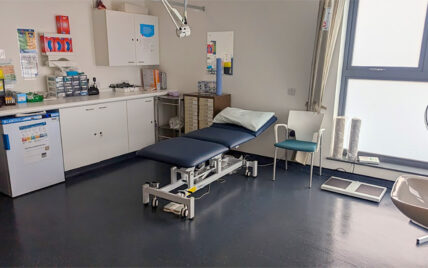

Every winter, GP surgeries, dental practices and care homes across the North West face norovirus, flu, COVID-19 and RSV all circulating at once. Waiting rooms fill up, staff absence rises and a single outbreak can close clinics for days. A clear winter cleaning checklist is one of the simplest and most effective ways to protect your patients, your team and your services.
In this guide prepared by the infection control team here at ProCleanse, we will explain the science behind winter infections. We will show you how long the main winter viruses survive on surfaces, and we’ll set out the checklist that our medical cleaning teams follow from October onwards.
Why infections rise in winter: the science
Winter does not simply bring “more germs”. A combination of environmental and behavioural factors gives viruses a some serious advantages:
- Cold, dry air helps enveloped viruses survive. Flu, COVID-19 and RSV are wrapped in a fragile fatty envelope, or outer lipid membrane. Cold temperatures and low humidity keep that envelope stable for longer, both in the air and on surfaces.
- Central heating dries indoor air. Heated buildings with closed windows have lower humidity and less fresh air, so respiratory droplets linger and settle on surfaces.
- More people spend more time indoors. Busy waiting rooms, reception desks and shared toilets bring infected and vulnerable people into close contact.
- Norovirus is built differently. It has no fatty envelope, just a tough protein shell. That makes it resistant to alcohol hand gels and many everyday disinfectants. It only takes a very small number of virus particles to cause infection.
Norovirus alone is estimated to cost the NHS more than £100 million a year…
Surfaces act as the bridge between people. A patient coughs into their hand and opens the toilet door. The next person touches the same handle and then touches their mouth or eyes without thinking. We witness this all the time whilst we carry out our cleaning services in surgeries around the region. Norovirus alone is estimated to cost the NHS more than £100 million a year, according to the Healthcare Infection Society’s 2023 norovirus guidelines.
How long do winter viruses survive on surfaces?
The chart below compares how long the four main winter viruses can survive on hard, non-porous surfaces such as door handles, reception counters, taps and plastic chairs. The difference is striking: flu and COVID-19 survive for days, but norovirus can survive for weeks.
How long winter viruses survive on hard surfaces
Maximum reported survival, in hours
Laboratory survival on hard, non-porous surfaces. Infectivity falls over time, but a contaminated surface can still pass infection on. Sources: Hall et al. (1980) for RSV; Bean et al. (1982) for influenza; van Doremalen et al., New England Journal of Medicine (2020) for SARS-CoV-2; UKHSA guidance that norovirus survives on surfaces for days or weeks (two weeks plotted).
In practical terms, a norovirus case in your waiting room on Monday can leave contamination behind for the following week’s clinics. That is why routine daily cleaning is not enough once cases start circulating and why the right chemicals matter so much.
Clean first, then disinfect: getting the chemistry right
Disinfectant sprayed onto a dirty surface does very little. Organic matter such as vomit, faeces and mucus soaks up the chlorine before it can reach the virus. To solve this we always follow a two-stage process:
- Clean with detergent first to remove visible dirt and organic matter.
- Disinfect with a product proven against the target virus. For norovirus, UKHSA recommends a chlorine-based solution at 1,000 parts per million (ppm) for surfaces. Alternatively, use a product tested to the virucidal standard EN 14476 with a specific norovirus claim.
Important, keep these important points in mind:
- Respect the contact time. Every disinfectant needs to stay wet on the surface for a set number of minutes to work. Wiping it off early wastes it.
- Rinse where needed. Chlorine can damage some metals and fabrics, so we rinse sensitive surfaces after the contact time and follow each product’s COSHH assessment.
- Remember that hand gel does not kill norovirus. Alcohol-based sanitisers work against flu and COVID-19 but not norovirus. Soap and warm water is essential during an outbreak to help lift, loosen and rinse away the virus particles off your skin.
Make it clear who cleans what…
Our winter cleaning checklist for surgeries
Whether you work with us or manage your cleaning in-house, use this checklist to make sure your practice is ready:
Before winter starts (October)
- Review your cleaning specification and frequencies against the National Standards of Healthcare Cleanliness 2021.
- Agree an outbreak protocol with your cleaning provider: who to call, how quickly they respond and what an enhanced clean includes.
- Make it clear who cleans what. Clinical staff usually clean equipment and couches between patients; your cleaning team covers the environment. Gaps between the two are where infections spread.
- Stock chlorine-releasing agents, EN 14476 wipes, body fluid spill kits, gloves, aprons and colour-coded cloths and mops.
- Check soap and paper towels at every sink and position hand gel at the entrance and reception.
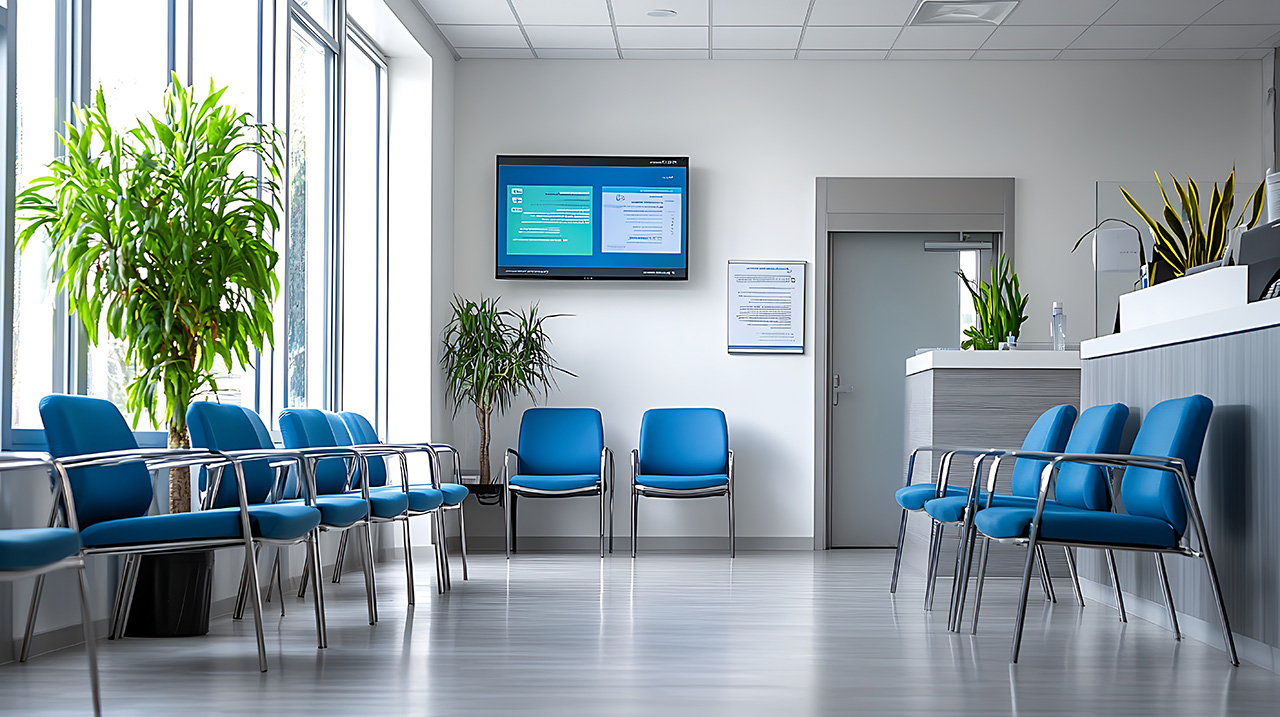
- Remove toys, magazines and leaflets from waiting areas and repair or replace torn chairs and couch covers, because these cannot be disinfected properly.
- Brief reception and clinical staff on how to report a vomiting or diarrhoea incident straight away.
When cases start rising locally
- Increase how often high-touch points are disinfected: door handles, push plates, check-in screens, card machines, reception counters, chair arms, light switches, toilet flushes and taps.
- Clean patient toilets more than once a day while clinics are running.
- Keep ventilation working and clean extract grilles and vents, which collect dust and droplets.
- Follow the UKHSA weekly flu and COVID-19 surveillance reports so you can step up cleaning before cases peak.
If you have an outbreak
- Deal with vomit and diarrhoea spills immediately using a spill kit, and keep people away from the area until it has been cleaned.
- Carry out an enhanced clean of affected areas at least daily using 1,000 ppm chlorine on all hard surfaces.
- Use single-use cloths and mop heads, or launder reusable ones at a high temperature.
- Change privacy curtains in affected consulting and treatment rooms.
- Exclude staff with vomiting or diarrhoea until 48 hours after their symptoms stop, in line with UKHSA guidance.
- Arrange a full deep clean once the outbreak is over and before you return to normal schedules.
- Record every clean – accurate cleaning logs are your evidence of good infection control at a CQC inspection.
Care homes: the same principles apply, but outbreaks spread faster where residents share living, dining and bathroom spaces. Plan in advance for deep cleans of bedrooms, communal toilets and bathrooms at short notice.
Get your practice winter-ready with ProCleanse
We have supported GP surgeries, dental practices and care homes across the North West since 2009. Our teams are trained in infection prevention and control and use EN-certified disinfectants and colour-coded equipment. We can also respond quickly with enhanced and deep cleans when an outbreak hits. Find out more about our medical cleaning services and dental practice cleaning, or see our local pages for Northwich and Liverpool.
For a Winter Readiness Review or a Free Site Assessment, Request a Quote Today and our team will be in touch
Frequently asked questions
How long does norovirus survive on surfaces?
Norovirus can survive on hard surfaces for days or even weeks. This is much longer than flu or COVID-19, which is why surfaces need disinfecting with a chlorine-based product or an EN 14476 virucide with a norovirus claim.
Does hand sanitiser kill norovirus?
No. Alcohol-based hand sanitisers are not effective against norovirus. Staff and patients should wash their hands with soap and warm water, particularly after using the toilet and before eating.
What disinfectant should a GP surgery use for norovirus?
UKHSA recommends a chlorine-based solution at 1,000 ppm for hard surfaces, applied after cleaning with detergent. Products tested to EN 14476 with a specific norovirus claim are an alternative for surfaces that chlorine could damage.
When should a surgery book a deep clean?
We recommend a deep clean before winter begins and again once any outbreak is over. A deep clean is also worthwhile after building work and ahead of an infection control audit or CQC inspection.
Further reading
- UKHSA: Norovirus, what to do if you catch it and helping to stop the spread
- NHS England: National Infection Prevention and Control Manual
- NHS England: National Standards of Healthcare Cleanliness 2021
- UKHSA: Weekly national flu and COVID-19 surveillance reports
- HSE: Control of Substances Hazardous to Health (COSHH)
You may also find our earlier guide useful: how medical cleaning changes in hot weather.